Wie messen Sie den Fortschritt Ihrer L&D-Programme? Wie steigern Sie das Engagement für Schulungen? Was braucht es, um eine gesunde Kultur in Ihrer Organisation zu schaffen? Wie schlägt sich Lepaya?
Beliebte Kategorien:

Ausgewählte Artikel

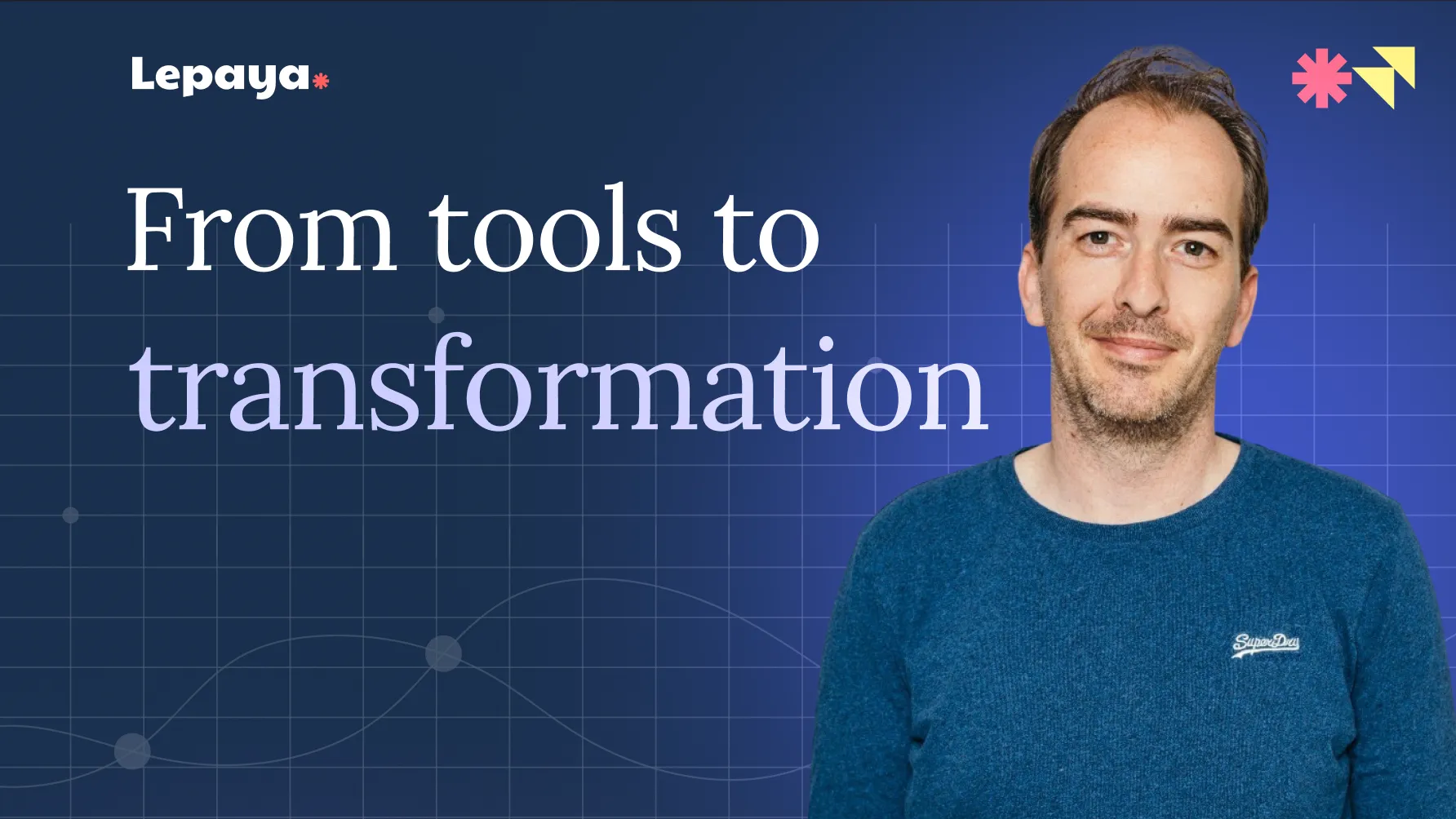
Jeroen Kraaijenbrink: How organizations can overcome the honesty gap
Senior leadership and boardroom teams invest heavily in commercial strategies to win market shares. Yet the most important and honest information driving strategy circulates in teams underneath, never making it to the table where decisions are made.Jeroen Kraaijenbrink, Executive Coach and Strategy Consultant at Kraaijenbrink Advisory, has spent years working on what he calls the honesty gap. We sat down with him to understand what the honesty gap actually is, where it lives in organizations, and why fixing it requires a leadership shift.How do you define the honesty gap?There's a narrow definition and a broad one. The broad one is: we have created organizations and systems where it's barely possible to be honest to yourself, about yourself, and honest to other people.Honesty isn't just lying. It's integrity, being authentically connected to other people and being aware of your own emotions and your own biases.The honesty gap, in a narrow sense, is the fact that truth and information don’t travel vertically upwards in a company. It's often hard to speak openly to your manager because it’s become rational not to. Many people have the experience: 'I've tried it once but then I was punished for it, or was ignored, so let it be, never mind.' That's the fascinating part: it's not good for people, it's not good for organizations and yet we somehow keep this system intact.Is it less about individual dishonesty and more about a collective culture?A lot of the most important information going through your company is between people and in conversations. You need to find a way to have an honest conversation, where the things that matter get on the meeting table, not just in the informal circuit. And I think that's pretty rare.A more systematic definition is that we're not using the collective intelligence of a company enough. We can radically improve it because we’ve made it rational to hide the truth and to keep things to yourself. A lot of it may not be intentional, but the very fact that someone is in a position above you automatically creates this tension: 'What do I show? What don't I show? Because my next performance appraisal is coming up.'Where does the honesty gap typically show up first, and who owns the problem?It starts with leaders. Solving it needs one leader at the top, the CEO at least, being open and reflective enough to admit that there is an honesty gap and that they are part of it. That's the self-reflection you need for any improvement and any change. Like in coaching: you need to be aware that there is stuff to improve. You don't need to be a perfect leader, but you need to be open enough to admit that there is an issue.You talk about the 'persona trap', what is that?You're stuck in a persona where you perform in a certain way within your company. You have a role, a position, a reputation, and that locks you into specific behaviors. The worse the match between who you are as a person and how you need to show up in your organization, the more inner conflict that’s created. Especially at the top, it’s a problem for many executives. They're supposed to be the people who know it all and be decisive. While if you're honest, you don't necessarily know everything, you’re uncertain and have anxieties.The inner core of the honesty gap is breaking the performance, breaking the acting you feel you must do. If you've put yourself in a role of being the strong, decisive, number-oriented leader, that's how you have to behave. But most people don't feel very comfortable in that kind of role because it's not who they are.Can you fix the honesty gap through individual coaching alone or does the system have to change?Part of it is a personal change, part of it is a system change. You can be on your own and be very authentic, but if the system doesn't change at all, you’ll struggle to break the honesty gap.What you need to do is work on the people, the culture, and the system. Ideally that has to include the top, because otherwise it stays at the level of the person being coached. If it's a team lead or a mid-manager, that person can partly create an island in the organization, a safe space for their team and their department. But still, the appraisal systems, objectives, and culture are company-wide. Why is this so hard to shift, even when leaders recognize the problem?We have normalized this idea that you have to be strategic in what you tell and what you show. You have to show up in a certain role at work. It's also the result of how we have separated work from life, which is a very unnatural thing. It's from the industrial age, because for any other species, work is life. But now there’s a split between work, with all the routines in companies, and then your private life. There's just one you, you're the same person at home as you are at work. The good news is that the honesty gap can be closed. While many companies have unintentionally created environments where people hesitate to speak openly, organizations prioritizing trust, authenticity, and psychological safety can unlock a competitive advantage. When employees feel safe to share concerns, ideas, and perspectives, collective intelligence grows, decision-making improves, and stronger relationships emerge across every level of the business.

Preparing people for an AI future nobody can fully predict
A conversation with Pascal Struijk on why Learning & Development sits at the center of successful AI adoption.
.webp)
Why finance talent needs new skills for AI cyber threats
Anthropic's Mythos exposed a critical gap in European banking's cyber defences. The vulnerability isn't just technical , but also human. Raymond Lansheuvel on the skills finance teams need to close it.
Alle Artikel
%2520(1).webp)
Aufbau einer leistungsstarken, generationenübergreifenden Belegschaft mit emotionaler Intelligenz
Personalleiter müssen Teams mit unterschiedlichen Altersgruppen mit den richtigen Fähigkeiten ausstatten, um die Zusammenarbeit zu fördern, die Produktivität zu steigern und die Leistung der sich schnell entwickelnden globalen Belegschaft zu steigern.
.webp)
Eine kompetenzbasierte Organisation aufbauen: Verlagern Sie Ihre Personalstrategie, um sich auf zukünftige Herausforderungen der Arbeitswelt vorzubereiten
Was ist eine kompetenzbasierte Organisation? Jenseits des Hypes geht es darum, Fähigkeiten zum Eckpfeiler Ihrer Talentmanagementstrategie und Ihres Ansatzes für organisatorische Agilität zu machen.

Lepaya Talent Talks: Wie Backbase die Talententwicklung für die Zukunft von Fintech gestaltet
Wir haben uns mit Esther getroffen, um die Personalentwicklungsstrategie des Unternehmens und die Fähigkeiten zu untersuchen, die das Unternehmen für den Erfolg priorisiert.
.webp)
Auf dem Weg zu einer strategischen Rolle in der Wirtschaft: 3 L&D-Führungskräfte teilen ihre Ansichten
Who wägen die Prioritäten der L&D-Führungskräfte ab, um ihre Organisationen zu unterstützen? Wir haben mit den Bildungsleitern von Freudenberg, Vontobel und Booking.com gesprochen, um das zu erreichen.
.webp)
Von der Rekrutierung bis zur Bindung: Strategien zur Förderung einer nachhaltigen Pipeline von Tech-Talenten
Angesichts des Mangels an technischen Talenten und der hohen Nachfrage nach digitalen Fähigkeiten benötigen Personalleiter neue Strategien, um die richtigen Mitarbeiter für die Zukunft zu binden.
.webp)
Der Aufstieg des bewussten Lernens: Der Wandel, der die Strategien zur Personalentwicklung im Jahr 2024 prägt
Data from the State of Skills Report 2024 von Lepaya zeigen eine interessante Verlagerung des Schwerpunkts auf Weiterqualifizierung, wobei eine neue Fähigkeit in den Vordergrund rückt: bewusstes Lernen.
Durchsuchen Sie unsere Inhalte nach Kategorien

Bleib dranfor our monthly updates
Abonnieren Sie, um Inspiration für L&D, innovative Strategien und praktische Ratschläge zu erhalten.

.png)