

Discover how HR and L&D can build the manager and workforce capability that turns AI deployment into real business impact.
Download now


Most organizations have already bought the AI tools their teams need, run the pilots, and rolled out the basic training. What's still missing is the return on any of it.
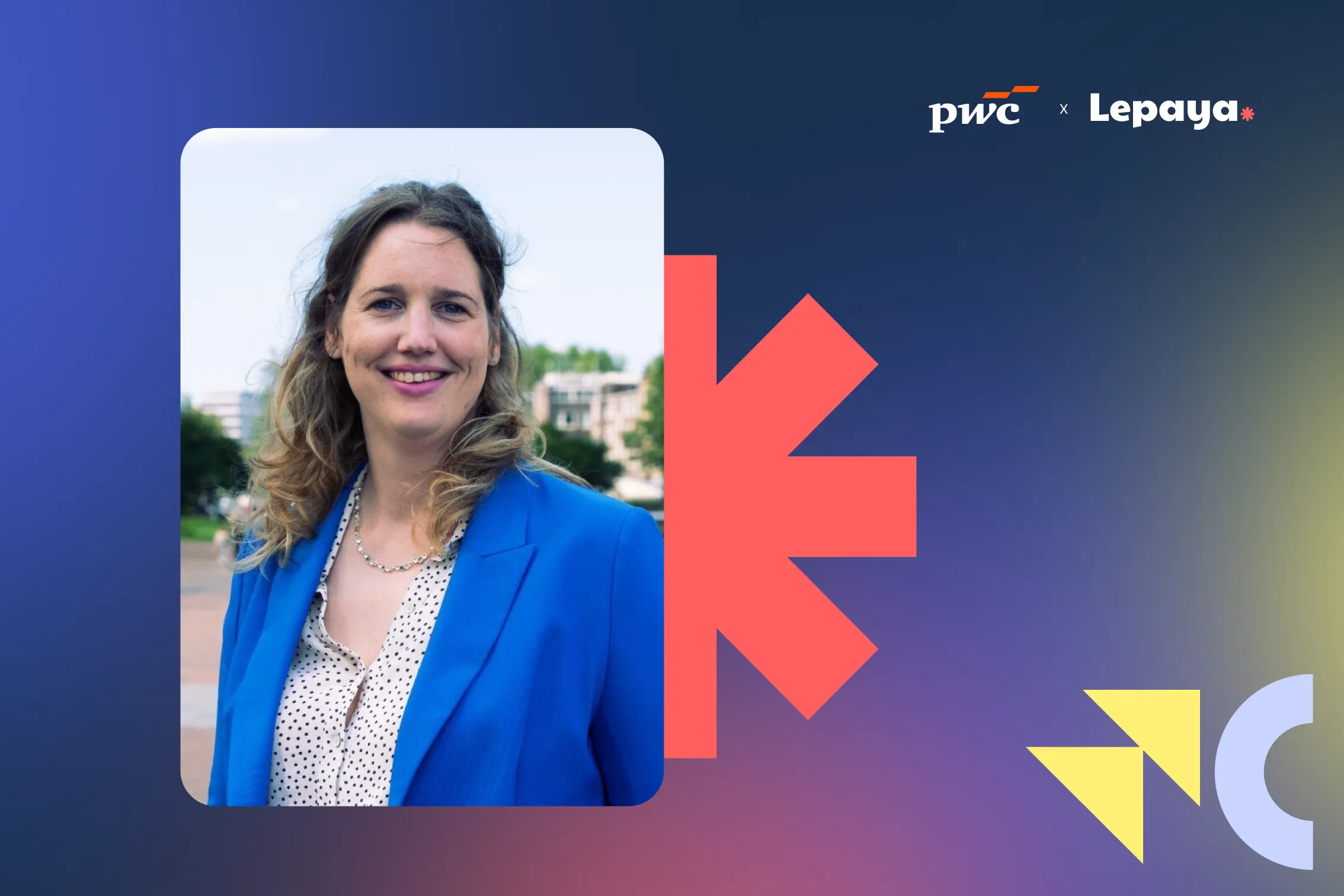
To understand why, we sat down with Marlene De Koning, Director at PwC Netherlands, who leads part of the firm's AI innovation practice at the intersection of people, technology, and data. Her team includes data scientists building predictive models and AI agents, alongside organizational psychologists focused on embedding AI into leadership, culture, and behavior change.
In this conversation, she talks about why the real work starts with redesigning tasks, not just training people on tools, what managers need to lead that shift, and why she sees unclear accountability, not resistance to AI itself, as the bigger risk.
A lot of it comes down to value realization. Leadership and the business are focused on productivity, efficiency, and short-term wins, while HR and L&D are tasked with figuring out what skills people need and delivering training. What's missing in between is a clear picture of how the work itself needs to change.
Organizations with a real 2030 view already have strategic goals to work toward, so the first question is what gets done by AI, and what stays with people. From there, you can design that human-agent split, check whether the right people already exist internally, and hire or reskill for any gaps. For the Dutch labor market specifically, external supply for a lot of these roles won't be there, so looking inward is usually the better bet.
There's a foundational layer everyone needs: basic training on tools like Copilot, GPT Enterprise, or Claude Enterprise. But that's AI-assisted work. The real ROI shows up once organizations move into augmented or automated work instead, and PwC's annual CEO survey confirms most CEOs still aren't seeing the returns they expected. Closing that gap takes a more strategic view of workflow redesign and where the business is heading.
That's where HR and L&D become co-designers of the future of work, not just trainers. If part of a role’s tasks move to AI, the starting point is figuring out what remains for humans to do, where judgment still needs to sit, and whether it's still worth training people on the parts AI can now take over.
Take the Google Maps example: my parents can navigate any city with a paper map, but hand my kids a map without their phones and most are lost. We've let go of a skill we no longer need - which is fine when the stakes are low. But in something like insurance claims handling, someone still needs to judge whether an AI-assisted outcome is right. If the people who can make that judgment retire with no one trained to replace them, that's a real problem.
We don't ask ourselves often enough how much we still need to protect, even for tasks AI can technically do. That's a strategic question, and HR should have a seat in the boardroom for it.
Start with the skills: look at how tasks are breaking apart, what skills remain within each function, and how that reshapes career paths and performance expectations. That shifts L&D's role too, from delivering a curriculum and measuring completion, to enabling performance and outcomes.
One practical tool we use is a matrix mapping what training should go to whom, since managers and employees often need different levels of judgment, and some teams need deep technical skills while others only consume what agents produce. Plot that by department instead of running one training program for everyone.
This varies by organization and management team, since people experience AI adoption through their manager, not the program on paper. We usually start by assessing what we call the AI mindset: trust in AI, in leadership, and in their own capability, across six dimensions, along with how open people are to learning and training. That tells you where interventions should start, and different starting points call for different kinds of leaders and different kinds of programs.
A lot of this plays out in small moments: a manager nudging the team in a weekly stand-up, setting a shared task to try with AI one week, and discussing the following week what worked and what didn't. That builds psychological safety and turns adoption into a team responsibility rather than an individual one, which is often the easiest lever for middle managers specifically to pull.
Managers also need more empathy and emotional intelligence than before, simply because so much change is landing on people at once, which can create real fatigue. If someone doesn't feel safe speaking up, or their manager doesn't understand what's actually being asked of them, adoption stalls.
Critical thinking and judgment, and both come with experience. Here's what people miss: when someone becomes a manager for the first time, they're trained on how to delegate, where their responsibility starts and ends, and how to judge someone else's work. Now we're handing everyone an AI to delegate to, without that same training. People need to know when they're accountable versus when the AI is, and understand what it did well enough to review it properly. The idea of just sitting back and letting AI handle it worries me, because that judgment is what keeps quality and accountability intact.
Problem framing matters just as much: define the actual problem before asking AI to solve it, otherwise it's garbage in, garbage out. Being able to articulate clearly what outcome you're actually looking for has always been a skill that develops as people move up into management. The difference now is that everyone needs to be able to do it, in a prompt, well enough for AI to understand what's being asked.
Accountability. If AI changes how work gets done and who's responsible for it, but accountability stays unclear, adoption creates risk instead of value.
I don't think people resist AI because they haven't heard the training messages. It's usually because their role, responsibility, or accountability isn't clear: will I be blamed if the AI gets something wrong, and whose responsibility is that, mine, my manager's, or the people who built the tool? Without clear governance and clear incentives, adoption stalls.
HR can set a lot of that through KPIs and performance expectations: communicating clearly why AI is being introduced, whether that's reducing stress, freeing up time, improving quality, or increasing output, and being honest about what's expected either way.
Move from AI literacy to AI-enabled performance. Basic literacy still matters, but it needs to connect directly to workflows, decisions, and outcomes, so redesigning work at the task level will become a bigger part of the agenda, since AI-assisted work alone hasn't delivered the returns organizations expected.
Manager readiness also needs a more prominent spot on the strategic agenda: the tools keep improving, but the people working with them aren't always keeping pace.
Organizations should shift from headcount planning to capability planning too, building a dynamic view of what skills the organization actually needs, and who, or what, is doing the work.
Finally, if AI takes over the tasks that used to build judgment, organizations need new forms of apprenticeship, mentoring, and supervised experience to replace them. We talk a lot about why critical thinking matters, but not enough about how people actually build it. That's what will separate organizations that win with AI: not the ones with the most tools, but the ones that still know how to build human judgment alongside it.

Wir bieten eine skalierbare Lösung für Mitarbeiterschulungen. Damit können Sie Ihre Mitarbeiter kontinuierlich weiterbilden.
Einen Anruf buchen

.webp)
Bewertung von:
KI verändert die Belegschaft, aber nicht ohne Risiken. Da Einstiegsrollen verschwinden und die menschliche Kognition aufgrund der übermäßigen Abhängigkeit von KI abnimmt, müssen Führungskräfte die Balance zwischen der Qualifizierung von Talenten und der Resilienz ihrer Fähigkeiten finden.
.webp)
Bewertung von:
In der KI-Ära stehen Personalabteilung und L&D vor einer unbequemen Frage: Was ist unser Wert, wenn KI das tun kann, was wir traditionell getan haben? Acht Experten erörtern, ob KI die zukünftige Belegschaft prägen wird oder ob sie schrittweise abgeschafft wird.
Close skill gaps, accelerate growth, and future-proof your workforce.




Many organizations have invested in AI tools, pilots, and basic training, but haven't redesigned how work gets done. The biggest opportunity is moving beyond AI-assisted work toward augmented and automated work that delivers measurable business outcomes.
HR and L&D should become co-designers of the future of work, not just trainers. They need to help identify how tasks are changing, what skills remain important, and where organizations need to reskill, redeploy, or hire people.
Managers need support in building trust, creating psychological safety, and helping teams experiment with AI. Regular conversations about what worked and what didn't can make AI adoption a shared team responsibility.
Critical thinking, judgment, and problem framing are essential. Employees need to understand when they remain accountable, how to evaluate AI outputs, and how to clearly define the problem they want AI to solve.
.webp)

.webp)