Wie der Talent Director von Vopak, Führungskräfte für eine globale Lieferkette entwickelt

• Vopak schätzt Menschen, Teamwork und investiert in globale Teams.
• Talentdirektoren überwachen das Entwicklungs- und Karrierepotenzial, um Störungen in den globalen Lieferketten zu vermeiden.
• Konzentrieren Sie sich auf die Entwicklung interner Talente für Führungspositionen, um teure Neueinstellungen zu vermeiden.
• Vopak investiert in persönliche Entwicklung und interne Netzwerke, um Karriere zu machen.
• Weiterbildungsprogramme konzentrieren sich auf Sicherheit, Nachhaltigkeit, datengesteuerter Betrieb und erneuerbare Energien, um mit den Veränderungen in der Branche Schritt zu halten.
Wenn ich meine Interviews über unser Wertversprechen für Mitarbeiter auf der ganzen Welt führe und sehe, dass unsere jährliche Fluktuationsrate bei 3,5% liegt, kommt Folgendes zurück: Wir kümmern uns um Menschen. Wir legen Wert auf Teamarbeit. Wir investieren in globale Teams.
Talentdirektoren überwachen ständig die Entwicklung und das Karrierepotenzial ihrer Mitarbeiter. Insbesondere in globalen Lieferketten müssen sie offene Stellen antizipieren und bereit sein, Mitarbeiter auf dem Arbeitsmarkt einzustellen oder interne Talente zu fördern, um Störungen zu vermeiden.
Findet die richtigen Leute für Führungspositionen, erhöht jedoch den Druck. Da sie wichtige Geschäftsbereiche für Lagerung oder Versand leiten, beeinflusst deren Managementtransformationsstrategien, Logistikabläufe und globale Teams.
Wenn ein Senior Manager ausscheidet, woher kommt sein Nachfolger? Wie können Talentmanager vermeiden, teure Führungskräfte einstellen und zukünftige Führungskräfte ihres Logistikunternehmens fördern?
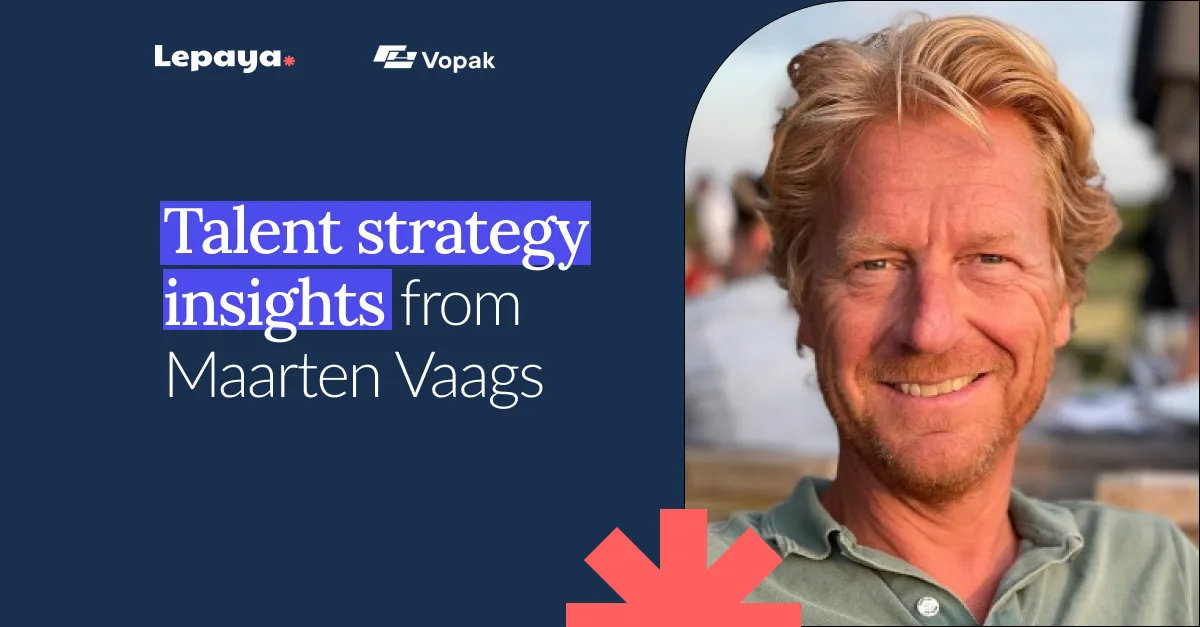
Nachfolgeplanung für Führungskräfte in der Logistikbranche mit Maarten Vaags, Talent Director bei Vopak
Maarten Vaags, Global Talent Director bei Vopak, beaufsichtigt die Karriereentwicklung von Führungskräften, die zusammen neun Geschäftsbereiche und 72 Energiespeicheranlagen auf der ganzen Welt leiten.
Da Lepaya hohe Standards in Bezug auf Sicherheit und Kundenzufriedenheit hat, hat Lepaya mit Maarten getroffen, um zu besprechen, wie Vopak die richtigen Führungskräfte für seine globalen Lagereinheiten entwickelt hat.
Wie hält Vopak seine Mitarbeiter auf globaler Ebene an?
„Wir haben neun Geschäftsbereiche auf der ganzen Welt — jeder in verschiedenen geografischen Gebieten — und sie haben ihre Personalleiter.
Wenn es um Talentmanagement und Nachfolgeplanung geht, unterstehen sie mir nicht hierarchisch, sondern funktionell. Ich beobachte ständig die 150 besten Manager bei Vopak und melde mich sehr häufig, um über die strategisch wichtigen Rollen zu sprechen.
Sind unsere Leute immer noch in einer guten Position? Was ist mit ihrem Wachstumspotenzial? Falls ja, was könnte ein logischer nächster Schritt sein und besteht diesbezüglich Druck? Weil wir das als Retentionsrisiko betrachten.
Deshalb investiere ich viel Zeit in die persönliche Entwicklung, um Ziele für den nächsten Schritt festzulegen und die interne Vernetzung zu fördern. “
Welche Karriere- und Führungsentwicklung bietet Vopak seinen Mitarbeitern?
„Wenn es um Führungskräfte geht, besteht meine größte Herausforderung darin, Entwicklungsprogramme zu entwickeln, die auf die Schwierigkeiten der Führungskräfte eingehen. Sie haben mehr Stakeholder aus verschiedenen Unternehmensnetzwerken, und sie müssen komplexe Projekte verwalten.
Für uns als kleineres Unternehmen sind wir in der Lage, Silos zu überbrücken. If I employee large company on leading level, is the challenge, as their career mainly are dedicated silos as Operations or Business Development (BD). We may be complete, agile profile, because we can offer a large group of workers no career in a specific disziplin.
Ich habe viele technische Mitarbeiter, aber nicht viele Führungspositionen für sie. Ich habe jedoch noch viel mehr Führungspositionen im Bereich BD. Es ist eine ständige Herausforderung, berufliche Mobilität zu bieten, aber es ist auch ein Vorteil, wenn Sie in unserem Unternehmen arbeiten. If you are an technical person and your career in a leading position in a other area want to wide, you come to us. “
Worauf konzentriert Vopak seine Weiterbildungsprogramme und warum?
„Zuallererst müssen wir die Terminals bestmöglich betreiben, weshalb wir unsere Mitarbeiter und Führungskräfte ständig weiterbilden. Wie können wir sicherer und nachhaltiger, effizienter, datengesteuerter und automatisierter arbeiten?
Zweitens sind wir stets bestrebt, datenaffine Mitarbeiter auszubilden, und zwar nicht nur in unserer Zentrale, sondern auch in Betrieb und Wartung unserer Terminals.
The last is a important. Wir bilden unsere Mitarbeiter im Bereich der erneuerbaren Energien weiter. If it goes to water, ammoniak and long-term energy storage, this areas are with many new technologies, security and market dynamics, which we must keep on the auge. “
Die Entwicklung der Mitarbeiter sorgt dafür, dass Vopak in einer globalen Lieferkette wächst
72 globale Speicheranlagen und erneuerbare Energien verändern den Sektor. Jede Störung hat tiefgreifende Auswirkungen auf die Mitarbeiter von Vopak und ihr Unternehmen.
The growth of Vopak is but not only determined by the global supply chain or the energy wende. Durch kontinuierliche Weiterentwicklung, Nachfolgeplanung und Umschulung für die Zukunft der Arbeit kann Vopak das globale Wachstum seines Unternehmens aufrechterhalten und seine Talente die nächsten Karriereschritte einschlagen.

Wir bieten eine skalierbare Lösung für Mitarbeiterschulungen. Damit können Sie Ihre Mitarbeiter kontinuierlich weiterbilden.
Einen Anruf buchen.webp)

Related Artikel

Bewertung von:
Jeroen Kraaijenbrink: How organizations can overcome the honesty gap
Senior leadership and boardroom teams invest heavily in commercial strategies to win market shares. Yet the most important and honest information driving strategy circulates in teams underneath, never making it to the table where decisions are made.Jeroen Kraaijenbrink, Executive Coach and Strategy Consultant at Kraaijenbrink Advisory, has spent years working on what he calls the honesty gap. We sat down with him to understand what the honesty gap actually is, where it lives in organizations, and why fixing it requires a leadership shift.How do you define the honesty gap?There's a narrow definition and a broad one. The broad one is: we have created organizations and systems where it's barely possible to be honest to yourself, about yourself, and honest to other people.Honesty isn't just lying. It's integrity, being authentically connected to other people and being aware of your own emotions and your own biases.The honesty gap, in a narrow sense, is the fact that truth and information don’t travel vertically upwards in a company. It's often hard to speak openly to your manager because it’s become rational not to. Many people have the experience: 'I've tried it once but then I was punished for it, or was ignored, so let it be, never mind.' That's the fascinating part: it's not good for people, it's not good for organizations and yet we somehow keep this system intact.Is it less about individual dishonesty and more about a collective culture?A lot of the most important information going through your company is between people and in conversations. You need to find a way to have an honest conversation, where the things that matter get on the meeting table, not just in the informal circuit. And I think that's pretty rare.A more systematic definition is that we're not using the collective intelligence of a company enough. We can radically improve it because we’ve made it rational to hide the truth and to keep things to yourself. A lot of it may not be intentional, but the very fact that someone is in a position above you automatically creates this tension: 'What do I show? What don't I show? Because my next performance appraisal is coming up.'Where does the honesty gap typically show up first, and who owns the problem?It starts with leaders. Solving it needs one leader at the top, the CEO at least, being open and reflective enough to admit that there is an honesty gap and that they are part of it. That's the self-reflection you need for any improvement and any change. Like in coaching: you need to be aware that there is stuff to improve. You don't need to be a perfect leader, but you need to be open enough to admit that there is an issue.You talk about the 'persona trap', what is that?You're stuck in a persona where you perform in a certain way within your company. You have a role, a position, a reputation, and that locks you into specific behaviors. The worse the match between who you are as a person and how you need to show up in your organization, the more inner conflict that’s created. Especially at the top, it’s a problem for many executives. They're supposed to be the people who know it all and be decisive. While if you're honest, you don't necessarily know everything, you’re uncertain and have anxieties.The inner core of the honesty gap is breaking the performance, breaking the acting you feel you must do. If you've put yourself in a role of being the strong, decisive, number-oriented leader, that's how you have to behave. But most people don't feel very comfortable in that kind of role because it's not who they are.Can you fix the honesty gap through individual coaching alone or does the system have to change?Part of it is a personal change, part of it is a system change. You can be on your own and be very authentic, but if the system doesn't change at all, you’ll struggle to break the honesty gap.What you need to do is work on the people, the culture, and the system. Ideally that has to include the top, because otherwise it stays at the level of the person being coached. If it's a team lead or a mid-manager, that person can partly create an island in the organization, a safe space for their team and their department. But still, the appraisal systems, objectives, and culture are company-wide. Why is this so hard to shift, even when leaders recognize the problem?We have normalized this idea that you have to be strategic in what you tell and what you show. You have to show up in a certain role at work. It's also the result of how we have separated work from life, which is a very unnatural thing. It's from the industrial age, because for any other species, work is life. But now there’s a split between work, with all the routines in companies, and then your private life. There's just one you, you're the same person at home as you are at work. The good news is that the honesty gap can be closed. While many companies have unintentionally created environments where people hesitate to speak openly, organizations prioritizing trust, authenticity, and psychological safety can unlock a competitive advantage. When employees feel safe to share concerns, ideas, and perspectives, collective intelligence grows, decision-making improves, and stronger relationships emerge across every level of the business.
%2520(1).webp)
Bewertung von:
Aufbau einer leistungsstarken, generationenübergreifenden Belegschaft mit emotionaler Intelligenz
Personalleiter müssen Teams mit unterschiedlichen Altersgruppen mit den richtigen Fähigkeiten ausstatten, um die Zusammenarbeit zu fördern, die Produktivität zu steigern und die Leistung der sich schnell entwickelnden globalen Belegschaft zu steigern.
Ready to drive impact together?
Close skill gaps, accelerate growth, and future-proof your workforce.


.webp)