Discover our new AI leadership training program and how it is built for organizations ready to move beyond AI awareness into real, measurable transformation.
Discover more



.png)
AI tools are already everywhere across organizations. Employees have access to AI assistants, organizations are investing in new technologies, and the pace of development keeps accelerating.
Yet there is still a gap between having the tools and changing how the work gets done.
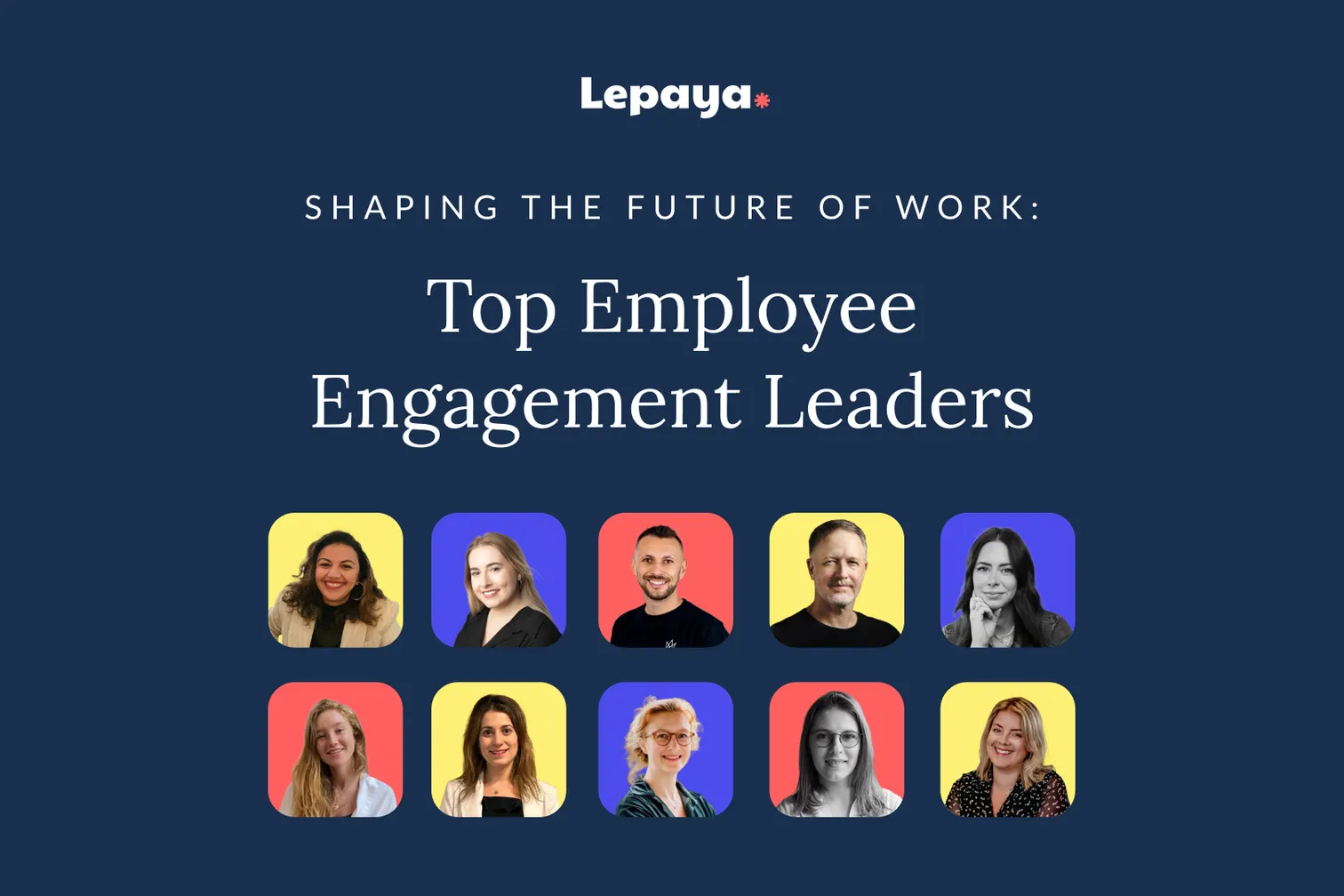
This was the focus of our recent panel discussion, where Murielle Bolsius, Head of Solutions at Lepaya, moderated a conversation with Marlene de Koning, Director of Workforce Transformation at PwC , Anna Svitak, Learning Advisor Safety at Shell, and Milica Sapic, Senior Enablement Architect, GTM at Personio. Together, they explored what organizations need to turn AI tool access into meaningful change for the business.
The discussion pointed to one central idea: AI adoption is not simply a technology or training challenge. It is a people and organizational transformation.
Many organizations have introduced AI tools, but employees can still end up using them as an additional layer on top of existing ways of working. Access to the technology does not automatically translate into meaningful change.
This raises an important question for HR and L&D: what actually needs to change before we start training people? As Marlene explained, organizations often focus on training before defining how work should be done differently which processes need to be redesigned, and which behaviours managers and employees need to adopt.
This changes the role of L&D. Rather than simply responding to new tools with training, L&D needs to help identify the capabilities and behaviours required as work evolves.
And because AI is developing so quickly, those capabilities cannot be reduced to tool-specific skills. Training someone to use a particular tool today may not prepare them for how that tool or the next one will work tomorrow.
That also means looking beyond individual skills to the operating model around AI. If teams, processes, responsibilities and decision-making structures are not designed to support new ways of working, introducing AI tools alone will not deliver the intended value.
This shifts the question from:
“How do we train people on AI?”
to:
“What do we need people to do differently - and what needs to change around them to make that possible?”
Managers play a critical role in turning AI strategy into everyday behavior. But manager readiness doesn’t mean becoming an AI expert.
It means being able to answer a more practical question: what will change in the way my team works, and how do I help them navigate it?
That starts with translating business ambitions into concrete changes for the team leading by example, setting clear boundaries for experimentation, and creating space for questions, concerns and learning.
As Marlene de Koning put it:
“They need to clarify which work and which decisions will change for them and for their teams.”
Managers also need to make AI part of everyday management rather than treating it as a separate initiative. Team meetings, one to ones and reflections on ways of working can become opportunities to discuss how AI is being used, what teams are learning and where new opportunities or challenges are emerging.
As roles and responsibilities change, managers also need to help employees understand where AI can support their work and where human judgment and accountability still sit. AI may take on more tasks, but that does not remove the responsibility of the person using it.
At the same time, there is no one size fits all starting point. Managers are already navigating competing priorities and significant organizational change. AI adoption therefore needs to reflect what teams can realistically absorb, rather than adding another transformation initiative on top of everything else.
This also means giving managers the space to learn from one another. Creating forums where they can share what is working, discuss challenges and rethink how AI fits into their teams can help turn experimentation into sustainable ways of working.
The manager’s role isn’t to have all the answers. It’s to help the team turn AI into better ways of working.
When it comes to AI upskilling, the starting point shouldn’t be the technology. It should be the work itself.
Before deciding who needs AI training, organizations need to understand what work needs to be done, which outcomes matter and where AI could change how people achieve them.
As Marlene de Koning put it:
“Train for the people or for the work that people will do and not simply for the tool that they have received.”
That doesn’t mean ignoring where curiosity already exists. Employees who are experimenting with AI can become valuable sources of peer learning showing colleagues what is possible and how AI can apply to real work.
But curiosity alone shouldn’t define the upskilling strategy. Business priorities should determine where capability needs to grow, while existing experimentation can help accelerate adoption.
This shifts the role of L&D from training people on a technology to building the capabilities people need to work differently with AI as part of that equation.
The question isn’t: “Who should we train on this tool?”
It’s: “Where do we need people to work differently, and what capabilities will make that possible?”
As AI takes on more of the cognitive work, the capabilities people bring to that work become more important, not less.
Critical thinking, synthesis, analysis, systems thinking, curiosity and adaptability all help people work effectively with AI. But the shift goes beyond using AI well.
If AI can take over parts of the tasks people currently perform, organizations need to ask a bigger question: what should people spend their time doing instead?
That means redesigning work around what humans can contribute from making sense of complex information to challenging assumptions, navigating ambiguity and making decisions where context and judgment matter.
As Anna Svitak highlighted:
“The curiosity to experiment and to have that growth mindset is key.”
And the more AI becomes part of everyday work, the more human capabilities such as communication, empathy, ethical judgment, transparency and trust matter too. People need to know how to question AI outputs, communicate decisions and understand where human responsibility remains.
As Marlene de Koning put it:
“It's also about the ethical skills and the trust.”
The goal is not simply to help people use AI more effectively. It is to help them understand where human judgment creates value and how their roles can evolve alongside the technology.
Giving people access to AI is adoption. Changing how work gets done is transformation.
The gap between the two is where many organizations struggle. A tool can be rolled out, training can be delivered and usage can increase without fundamentally changing workflows, behaviors or outcomes.
That’s why AI transformation needs to start before the training. As Murielle summarized, organizations need to “diagnose first”: understand the business strategy, identify capability gaps and consider the culture before launching another training rollout.
From there, the focus shifts to the conditions that make change stick. That means training for the work people will actually do, designing for the behaviors needed to work effectively with AI, and creating space to test, learn and adapt.
As Marlene de Koning put it:
“Train for the people or for the work that people will do and not simply for the tool that they have received.”
Anna Svitak reinforced the importance of designing for sustainable behavior change:
“Really look at what are the behaviors that we need from people to keep this sustainable and train for those.”
And as Milica Sapic highlighted, organizations also need patience in the process:
“Have patience as well for testing, learning, and then scaling.”
The technology is part of the equation. But it shouldn’t define the starting point.
AI transformation doesn’t start with the tool. It starts with rethinking how people work with it.

Nous proposons une solution évolutive de formation des employés. Elle vous permet d'améliorer en permanence les compétences de votre personnel.
Réservez un appel
It's not only about the technology, but also about the people transformation.
.png)
Organizations need to build behaviours that allow people to adapt, experiment and learn as the technology changes.

Start from the strategic decisions, and then from the job to be done, and then look at your talent and your work design.
.png)

.webp)
Révision par :
Découvrez pourquoi les entreprises suppriment les cadres intermédiaires, comment l'IA redéfinit le rôle des managers et ce que les RH et le L&D devraient faire avant d'aplatir les hiérarchies.
Close skill gaps, accelerate growth, and future-proof your workforce.




AI value is still relatively limited compared with many organizations’ initial investments, and the outcome depends on what the organization is trying to achieve. AI can support efficiency, quality, volume, innovation, customer satisfaction. The key is to redesign the right workflows around the intended outcome rather than focusing only on the technology.
Anna explains that Shell addresses psychological safety generally and discusses it in manager training, but she hasn't specifically worked on building psychological safety in the context of AI adoption.
Marlene then explains a framework looking at people's mindset, trust, openness to speak up, roles and responsibilities, and experimentation. These insights can be used to identify where teams need interventions and clearer communication.
The speakers highlight that as AI becomes more integrated into everyday work, capabilities such as critical thinking, synthesis, analysis, systems thinking, agility, adaptability, resilience, curiosity and a growth mindset become increasingly important. They also emphasize the ability to rethink and reimagine work as AI takes over parts of existing tasks. Beyond these capabilities, communication, empathy, compassion, ethical judgment, trust and transparency remain essential. Milica also highlights the importance of giving people agency in how they adapt to AI and helping them see change as something they can actively shape.
.webp)