Explore the data from 196 global companies and uncover the key skills trends for the year ahead.
Download



.webp)
The financial sector is accelerating AI adoption faster than it is building the human capability to manage it. That gap between deployment speed and workforce readiness is a defining challenge for many HR leaders in financial services.
Only 14% of CFOs completely trust AI to deliver accurate accounting data on its own. The vast majority - 97% - say human oversight is critical for ensuring accuracy when AI is deployed. Yet most organizations are still treating AI adoption in L&D as a technology project. The skills and leadership capability gap needed to make that oversight effective are being built too slowly, or not at all.
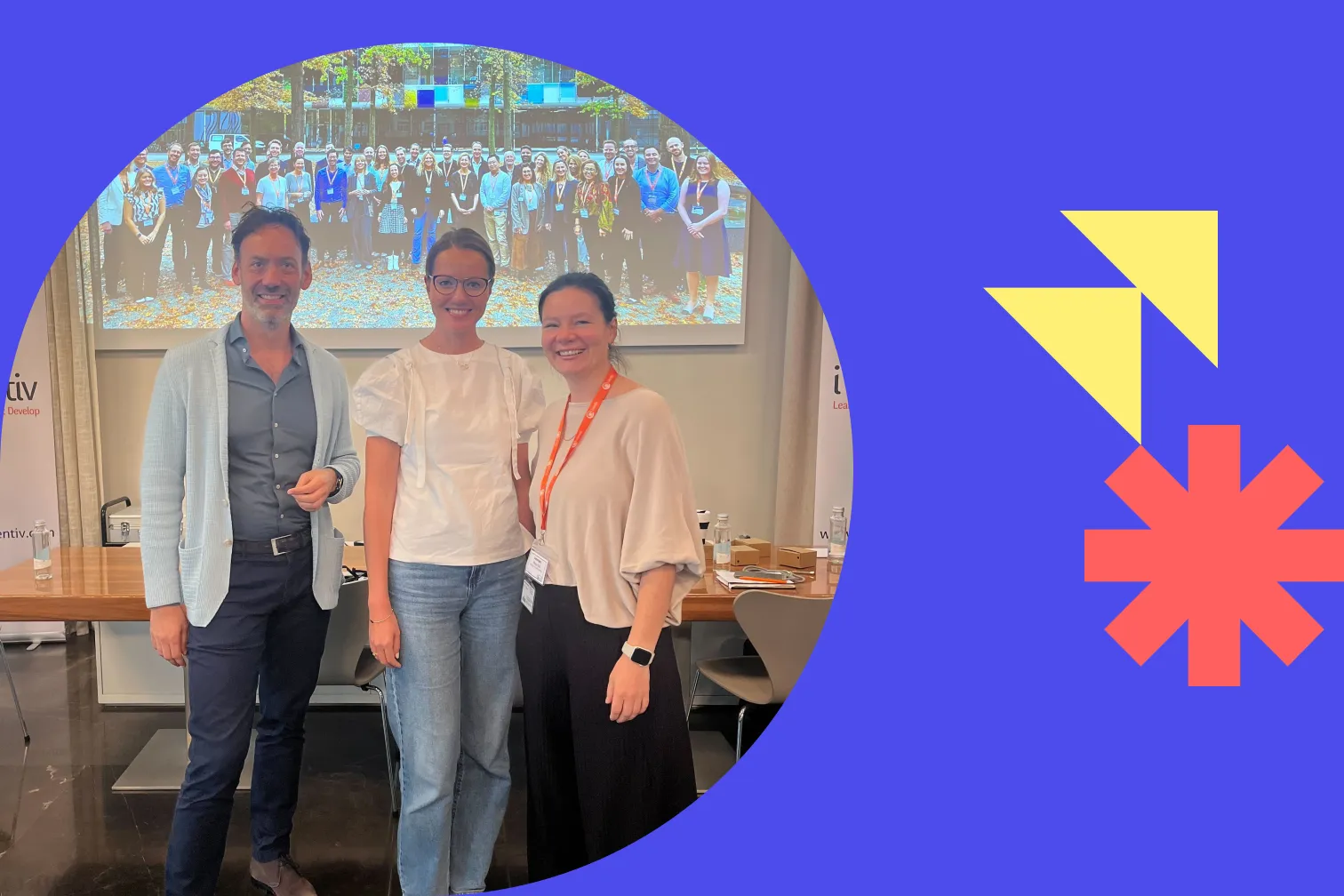
This tension sat at the centre of the Leaders in Finance HR Event - a gathering of 100 HR professionals from across the Dutch financial sector. Based on the key insights, the successful financial institutions in this era will build the human infrastructure to use new AI tech responsibly and effectively.
Nicole Scoble Williams, Global Future of Work and Agentic Workforce Leader at Deloitte, identified that one in three employees has had to adapt to fifteen or more organizational changes in the past year. Most are being managed through those changes with methods designed for a slower world - town halls, top-down communications cascades, one-off training events.
The result is not only slowing technology adoption, but also eroding trust. When the pace of transformation outstrips the human systems designed to support it, it undermines the cultural coherence, and confidence that financial institutions depend on to function.
AI in finance fails not because the models lack capability but because the data lacks context. Human professionals navigate complexity through institutional knowledge - they know which numbers to trust, how structures map across systems, and where adjustments are needed. AI has none of these advantages. That institutional knowledge, and the judgment to apply it, is precisely what workforce development in financial services needs to protect and build to keep up with the speed of transformation.
When the pace of change starts to outrun human systems, it doesn't just affect productivity. It erodes trust, shared values, and the cultural foundations that hold organisations together.
Nicole Scoble Williams, Global Future of Work & Agentic Workforce Leader, Deloitte
Karlijn van den Berg, Head of Talent at ABN AMRO, made the case that most talent programmes in financial services are solving the wrong problem.
That critical question one the talent management field has been avoiding. In a financial sector where AI is reshaping roles faster than job architectures can be redrawn, careers are no longer linear, and employees across every generation are making deliberate choices about where they invest their working lives, talent can no longer be defined entirely by what the organisation needs from them.
Van den Berg mapped three tensions that now define talent management in the sector
The first is the tension between organizational need and individual motivation. Succession planning is built around pipeline logic - who is ready for what role and how can they be developed accordingly. At ABN AMRO, aligning development to what individuals actually care about reduced attrition and raised engagement.
The second tension is between scalability and personalisation. AI is a genuine asset for personalized learning paths, pattern recognition in development data, smarter recommendations at scale. But van den Berg drew a sharp line around what AI cannot do. It can optimize for outcomes already defined. It cannot help a person understand what they actually want. That remains a human conversation.
The third tension is the connection between performance and potential. Financial services has long rewarded performance and assumed potential follows. But potential is contextual and non-linear. Someone who excels in a structured environment may struggle as automation disrupts workflows. Someone overlooked because they don't fit the prevailing leadership model may be exactly the thinker the organisation needs as complexity increases.
AI is good at optimising for outcomes we've already defined. It's less good at helping someone figure out what they actually want. And that's a deeply human conversation that we as HR professionals need to be able to have.
— Karlijn van den Berg, Head of Talent, ABN AMRO
The conclusion: build talent systems that are not merely efficient but genuinely human. If people do not feel seen in your programmes, they will find somewhere else where they do. In a tightening market for skilled financial talent, that is a strategic concern.
Laureen Rwatirera, VP Talent & Learning at Prosus, brought a perspective shaped by leading development across one of the world's most complex technology investment organizations. AI is a revolution larger in scope than the Industrial Revolution - which primarily disrupted manual and factory work. AI, however, will reshape virtually every professional role in some way.
The implication for L&D is significant. Capability building has to be the engine of workforce transformation. The organisations managing AI-driven change will invest in developing the human capacity to carry change: the leadership skills, the judgment under pressure, the ability to hold team cohesion and direction when the environment is shifting underneath.
This is where financial institutions face a particular structural challenge. The sector's traditional strength - process rigour, compliance culture, risk management discipline - can become a constraint when the environment demands rapid iteration, tolerance for ambiguity, and adaptive leadership that does not yet appear in most job specifications or performance frameworks.
Isabel Workel-Tijhuis of Triodos Bank and Nathalie Amador de Vries of Alpina Group surfaced that the expectations employees bring to work have shifted structurally - not as a generational trend to be managed but as a permanent recalibration of the employment relationship.
For Triodos, employee development at the bank is deliberately connected to purpose, not just performance. In a financial institution built around values-driven banking, that connection is both authentic and strategic.
Employees - particularly those with the skills financial institutions most need to retain - are making increasingly explicit choices about where they work based on whether the organisation's mission connects with their own sense of purpose.
For HR leaders, this cannot be resolved with better employer branding or more compelling onboarding. It requires genuine alignment between what the organisation stands for and how it develops and rewards its people. Where that alignment is missing, no talent programme will compensate for it.
The throughline across every session was about what AI makes visible - the gaps in leadership capability, talent system design, and organisational culture that were always there, but are now consequential in ways they were not before.
Financial institutions that approach the current moment as a technology challenge will underinvest in precisely the talent capabilities that determine whether transformation succeeds or stalls. Three conclusions from the day stand out:
"That is what Human by Design actually means. Not designing work around AI. Designing it around the humans who will make the difference when AI cannot."
— Leaders in Finance HR Event 2026

We offer a scalable employee training solution. It lets you continuously upskill your people.
Book a call



Close skill gaps, accelerate growth, and future-proof your workforce.




.webp)