Explore the data from 196 global companies and uncover the key skills trends for the year ahead.
Download



The past year has been marked by turbulence, with businesses of all sizes facing financial challenges, reorganizations, and shifting strategies. Against this backdrop of uncertainty, organizations are making a decisive pivot in their talent development strategies.
Drawing from data analysis of 27,746 learners across 196 industry-leading companies and 204,111 hours of skills practice, Lepaya's The State of Skills 2026 report revealed that empowering leadership training has grown continuously for three years, up 511% from 2023 to 2025, and now accounts for more than half of all training investment.

This growth reflects organizations' urgent need to develop strong internal guidance during market uncertainty. But what's driving this focus, and what are key trends in leadership development for today's complex business environment?
Empowering leadership training focuses on developing leaders who inspire, enable, and support their teams to take ownership of their roles, make decisions, and achieve their team’s potential. The training includes capabilities essential for modern business leadership such as building psychological safety within teams, setting and achieving team goals, cultivating leadership mindset and values, and driving talent performance.
While traditional leadership models rely on top-down decision-making, empowering leadership cultivates environments where teams can thrive with autonomy, trust, and shared responsibility. In this framework, leaders evolve from controllers to enablers, becoming facilitators of high-performing workplaces where their teams can confidently tackle challenges and opportunities. They build trust through transparency and consistent support, encourage experimentation while providing safety nets for learning from failure, and actively develop their team members' capabilities to think strategically and act autonomously.
The growth in empowering leadership training is a signal that organizations now see traditional leadership as a constraint. Three converging pressures are driving that conclusion:
These pressures demand a new approach to leadership. Organizations need leaders who delegate authority, grant autonomy, and enable teams to operate without constant oversight. Especially as AI adoption reshapes workflows, leaders must become change navigators: demystifying technology, championing experimentation, and mitigating fear. They must connect transformation goals to daily behaviors, helping teams understand how AI changes work without replacing human value.
With empowering leadership representing 51.6% of all training investment in 2025, organizations are placing a clear bet: transforming how leaders lead has become the primary lever for organizational effectiveness when everything else remains uncertain.
Dr. Makoto Makabe, Director of Corporate Learning & Development at Freudenberg, explains how his organization is developing empowering leaders:
"Our programs are designed to engage leaders across Freudenberg in meaningful discussions about doing the right thing. These programs challenge participants to apply concepts within their own contexts, rather than waiting for trainers to provide answers. Leadership isn’t about expecting to be told what to do—that’s following, not leading. True leadership requires courage: taking risks, making decisions despite incomplete information, and staying accountable.”
Roxtec, a manufacturer of sealing solutions operating across multiple markets, offers a concrete example of how systematic leadership development can translate into business performance.
As a globally distributed company, Roxtec needed leaders who could coordinate across borders, enable autonomous team performance, and retain talent in an industry facing severe labor shortages. Partnering with Lepaya, they designed a leadership upskilling program with two goals: developing leaders who empower rather than just direct, and building connections across global teams.
On the first, the program focused on coaching conversations, feedback skills, and managing stress, practiced through real-life scenarios with business actors, and grounded in helping leaders discover and adapt their own leadership style. On the second, in-person sessions brought leaders from different regions together, with online follow-ups to maintain collaboration and knowledge sharing across markets.
The results showed up in daily behavior. As Samantha Tan, Commercial & Logistics Manager at Roxtec, put it:
“Lepaya's training gives me a lot of opportunities to think outside the box. I was able to have more thoughtful conversations, more meaningful conversations with my team.”
Beyond engagement, the program addressed one of manufacturing's most pressing challenges: retaining skilled talent through genuine development rather than just task management.
With leadership development emerging as the top training priority in 2025, organizations are reassessing how they build empowering leadership capabilities at scale.
Moving beyond traditional one-off training programs, success in 2026 and beyond demands creating continuous learning environments that reinforce empowering leadership principles daily.
This means implementing personalized coaching programs that help leaders build psychological safety and trust, establishing feedback systems that reinforce autonomous decision-making, and providing practical tools for guiding teams through complex challenges.
Organizations that get this right will be better placed to build teams that can make good decisions, adapt quickly, and grow without needing direction at every turn. That becomes even more consequential as AI takes on a growing share of routine work. The more AI handles, the more the human side of leadership matters: building trust, developing people, and helping teams figure out how their work is changing.
“To lead a people-centered AI future, HR and L&D must go beyond teaching tools and focus on building talent—cultivating the uniquely human skills AI can’t replicate and creating cultures where learning is continuous, experimentation is safe, and transformation is something people shape, not endure. Equally crucial is deliberate role design: organizations must decide which skills and tasks belong to AI agents and which remain human, so both can excel in a complementary system.” - Marlene De Koning, Director of Workforce Transformation at PwC

We offer a scalable employee training solution. It lets you continuously upskill your people.
Book a call


Review by:
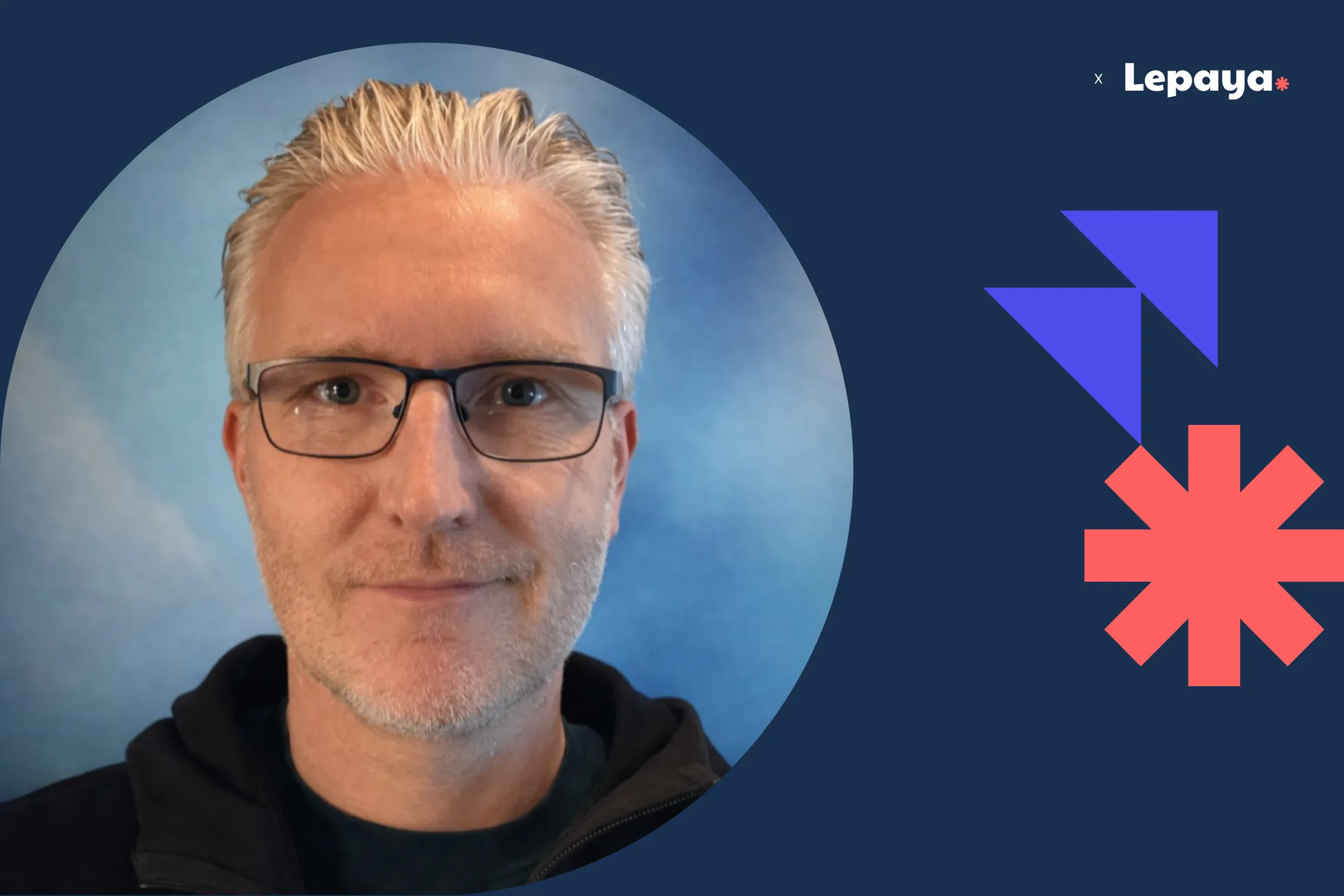
Senior leadership and boardroom teams invest heavily in commercial strategies to win market shares. Yet the most important and honest information driving strategy circulates in teams underneath, never making it to the table where decisions are made.Jeroen Kraaijenbrink, Executive Coach and Strategy Consultant at Kraaijenbrink Advisory, has spent years working on what he calls the honesty gap. We sat down with him to understand what the honesty gap actually is, where it lives in organizations, and why fixing it requires a leadership shift.How do you define the honesty gap?There's a narrow definition and a broad one. The broad one is: we have created organizations and systems where it's barely possible to be honest to yourself, about yourself, and honest to other people.Honesty isn't just lying. It's integrity, being authentically connected to other people and being aware of your own emotions and your own biases.The honesty gap, in a narrow sense, is the fact that truth and information don’t travel vertically upwards in a company. It's often hard to speak openly to your manager because it’s become rational not to. Many people have the experience: 'I've tried it once but then I was punished for it, or was ignored, so let it be, never mind.' That's the fascinating part: it's not good for people, it's not good for organizations and yet we somehow keep this system intact.Is it less about individual dishonesty and more about a collective culture?A lot of the most important information going through your company is between people and in conversations. You need to find a way to have an honest conversation, where the things that matter get on the meeting table, not just in the informal circuit. And I think that's pretty rare.A more systematic definition is that we're not using the collective intelligence of a company enough. We can radically improve it because we’ve made it rational to hide the truth and to keep things to yourself. A lot of it may not be intentional, but the very fact that someone is in a position above you automatically creates this tension: 'What do I show? What don't I show? Because my next performance appraisal is coming up.'Where does the honesty gap typically show up first, and who owns the problem?It starts with leaders. Solving it needs one leader at the top, the CEO at least, being open and reflective enough to admit that there is an honesty gap and that they are part of it. That's the self-reflection you need for any improvement and any change. Like in coaching: you need to be aware that there is stuff to improve. You don't need to be a perfect leader, but you need to be open enough to admit that there is an issue.You talk about the 'persona trap', what is that?You're stuck in a persona where you perform in a certain way within your company. You have a role, a position, a reputation, and that locks you into specific behaviors. The worse the match between who you are as a person and how you need to show up in your organization, the more inner conflict that’s created. Especially at the top, it’s a problem for many executives. They're supposed to be the people who know it all and be decisive. While if you're honest, you don't necessarily know everything, you’re uncertain and have anxieties.The inner core of the honesty gap is breaking the performance, breaking the acting you feel you must do. If you've put yourself in a role of being the strong, decisive, number-oriented leader, that's how you have to behave. But most people don't feel very comfortable in that kind of role because it's not who they are.Can you fix the honesty gap through individual coaching alone or does the system have to change?Part of it is a personal change, part of it is a system change. You can be on your own and be very authentic, but if the system doesn't change at all, you’ll struggle to break the honesty gap.What you need to do is work on the people, the culture, and the system. Ideally that has to include the top, because otherwise it stays at the level of the person being coached. If it's a team lead or a mid-manager, that person can partly create an island in the organization, a safe space for their team and their department. But still, the appraisal systems, objectives, and culture are company-wide. Why is this so hard to shift, even when leaders recognize the problem?We have normalized this idea that you have to be strategic in what you tell and what you show. You have to show up in a certain role at work. It's also the result of how we have separated work from life, which is a very unnatural thing. It's from the industrial age, because for any other species, work is life. But now there’s a split between work, with all the routines in companies, and then your private life. There's just one you, you're the same person at home as you are at work. The good news is that the honesty gap can be closed. While many companies have unintentionally created environments where people hesitate to speak openly, organizations prioritizing trust, authenticity, and psychological safety can unlock a competitive advantage. When employees feel safe to share concerns, ideas, and perspectives, collective intelligence grows, decision-making improves, and stronger relationships emerge across every level of the business.
Close skill gaps, accelerate growth, and future-proof your workforce.